
Tensions Escalate as Israel-Iran Clashes Spark Fears of Regional War
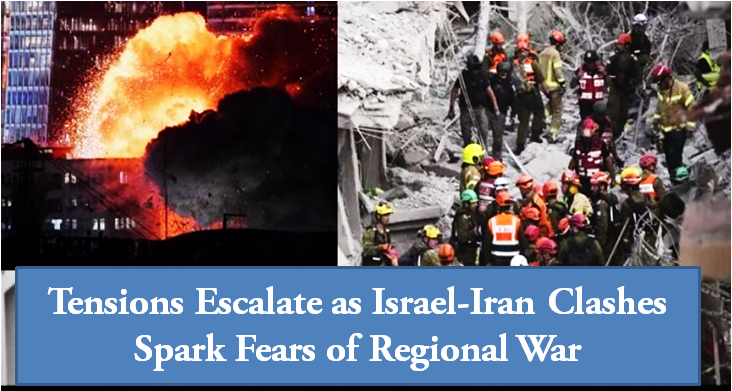
Tel Aviv: A dramatic escalation in hostilities between Israel and Iran has brought the Middle East to the brink of a broader conflict, prompting international alarm and calls for de-escalation.
In the early hours of Friday morning, Iran launched a retaliatory strike involving over 150 ballistic missiles and more than 100 drones, targeting key Israeli cities including Tel Aviv and Jerusalem. The strikes came in response to a large-scale Israeli air assault a day earlier, which reportedly killed senior Iranian military and nuclear officials and damaged multiple nuclear facilities.
Israeli Airstrikes Target Iranian Military and Nuclear Leadership
On Thursday at approximately 3:30 AM local time, Israel carried out coordinated airstrikes involving more than 200 fighter jets, targeting strategic military and nuclear infrastructure across Tehran and other locations in Iran.
Among those reported killed in the Israeli operation were:
- Major General Mohammad Bagheri, Chief of Staff of Iran’s Armed Forces
- General Hossein Salami, former IRGC commander and a key figure in Iran’s nuclear programme
- Ali Shamkhani, former deputy security minister
- Mohammad Mahdi Tehrani, former head of the Atomic Energy Organisation of Iran
- Six additional nuclear scientists
Israel also claimed that six nuclear enrichment facilities, including the critical Natanz plant, were damaged. However, Iranian authorities have not officially confirmed all the reported deaths or the extent of the damage.
Iran Responds With Missile and Drone Attacks
In retaliation, Iran launched a massive counteroffensive involving ballistic missiles and drones directed at Israeli urban centres. While Israel’s Iron Dome missile defence system intercepted the majority of the incoming threats, authorities reported widespread disruption and heightened alert levels. The United States was confirmed to have provided military assistance in repelling the attacks.
Israeli Prime Minister Benjamin Netanyahu urged the Iranian population to rise against what he called a “violent regime”. He also declared a state of emergency as the country braced for further escalation.
International Fallout and Airline Disruptions
Amid rising tensions, Iran closed its airspace, prompting numerous international carriers, including Air India, to reroute or cancel flights. The U.S. and Israel have long demanded that Iran dismantle its nuclear ambitions, a key factor behind the conflict’s escalation.
Iran’s Supreme Leader Ayatollah Ali Khamenei vowed that Israel would face “a bitter and painful fate”, pledging lawful but forceful retaliation. Iranian President Masoud Pezeshkian called for national unity in the face of what he described as Israeli aggression.
Global Response
United States
President Donald Trump warned Iran to return to the nuclear non-proliferation agreement or face continued Israeli military pressure. He criticised Israel’s decision to act unilaterally, stating that Israeli Prime Minister Netanyahu ignored advice to avoid escalating the conflict. However, reports suggest Israel notified the U.S. before carrying out the attack.
U.S. Secretary of State Marco Rubio confirmed that the strike was “unilateral” and emphasised the importance of avoiding further destabilisation.
Russia
The Russian Ministry of Defense condemned the Israeli strike, calling it an “unprovoked and unacceptable act” that threatens regional peace. Moscow stated it is closely monitoring the situation.
Gulf States
The United Arab Emirates issued a strong condemnation of the Israeli attack, urging the United Nations Security Council to take immediate action to secure a ceasefire and prevent further escalation.
Irish Samachar English News
{OR} Kindly click to follow the Irish Samachar News channel on WhatsApp
Comments are closed.