
Trump Threatens EU Over Digital Rules Targeting Tech Giants
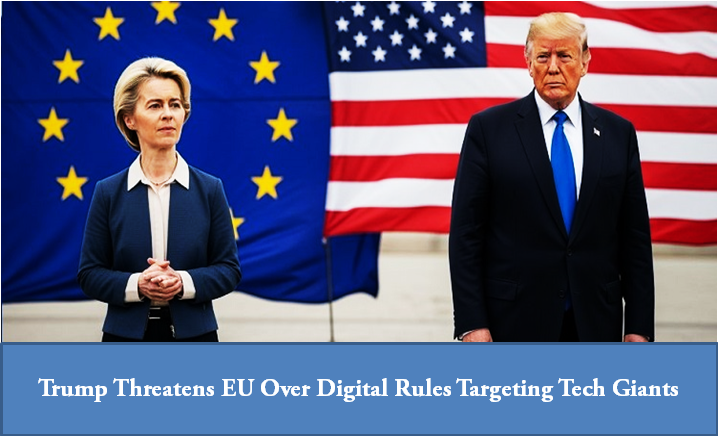
Washington: U.S. President Donald Trump has launched a fresh attack on the European Union’s regulatory framework for major technology companies, warning that the Digital Markets Act (DMA) and Digital Services Act (DSA) unfairly target American firms. Trump argued that such measures discriminate against U.S. multinationals, including Meta, Apple, Alphabet, and Amazon, and threatened to impose additional tariffs and export controls if the rules are not rolled back.
Responding to the criticism, European Commission Chief Spokesperson Paula Pinho stressed that regulating economic activity within the bloc is a matter of EU sovereignty and its member states. The EU has already levied significant fines on U.S. tech firms under its new digital rules, which aim to rein in the power of online platforms. Similar digital taxes have also been introduced in the U.K. and other jurisdictions.
The confrontation follows Trump’s earlier move in June to suspend trade talks with Canada over Ottawa’s planned digital services tax. Canada later scrapped the measure after U.S. pressure. Since returning to office in January, Trump has increasingly turned to tariffs as a foreign policy and economic tool, applying them to both allies and rivals.
“America and American technology companies are not the world’s piggy bank or doormat,” Trump wrote on Truth Social, vowing that if foreign digital regulations remain in place, U.S. retaliation would follow.
EU Pushback
EU officials have rejected Trump’s accusations. Thomas Regnier, spokesperson for EU tech policy, said the bloc’s digital legislation is not aimed at any specific country or company. He pointed out that enforcement has also targeted Chinese platforms such as AliExpress, TikTok, and Temu, underscoring that the framework is about safeguarding consumers, not punishing U.S. firms.
Regnier emphasised that the DSA seeks to tackle misinformation, hate speech, and harmful material online by obliging platforms to remove illegal content quickly and suspend repeat offenders.
“The claim that the DSA is a censorship tool is false and baseless,” Regnier said. “We are not asking platforms to remove content; we are asking them to enforce their own terms and conditions.”
The dispute marks a new front in the transatlantic tensions over digital regulation, with Trump signalling a tougher stance against countries that impose restrictions or taxes on U.S. tech companies.
Irish Samachar English News
Comments are closed.