
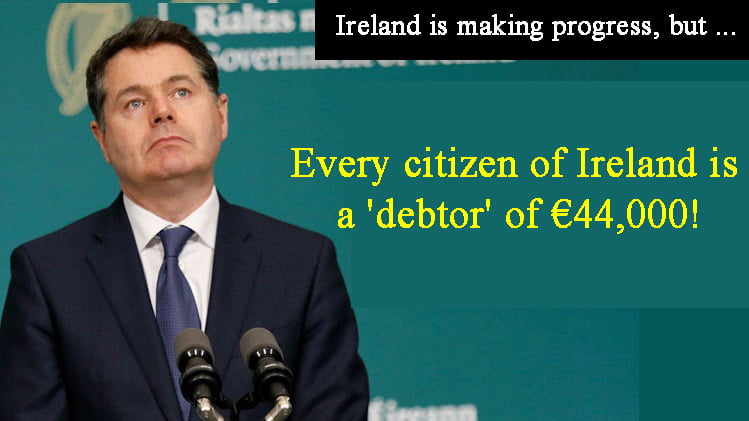
Every citizen of Ireland is a ‘debtor’ of €44,000; even though economy progresses, rising national debt will be a challenge
DUBLIN: Even when it is said that the Irish economy is on the path to recovery, the accumulating national debt is troubling the country. It has been pointed out that the COVID-19 pandemic and related issues have contributed to the increase in the country’s debt.
As a result of the impacts of COVID-19 on the economy, national debt rose from €204 billion to around €239 billion. This is an increase of around €35 billion. However, Finance Minister Paschal Donohoe predicts that the Irish economy will make a good recovery in the second half of this year. He was speaking in the wake of the publication of the Government’s Annual Report on Public Debt.
Due to COVID-19, there was a sharp increase in debt last year. Debt to gross national income rose to 108%. According to this, the public debt of each person in the country is €44,000. It is expected to increase to 115%, or about €47,700 per person, this year. However, the Finance Minister asserted that our economy can overcome this.
“Despite the challenges that we have with our debt, it comes against the context of national finances that can sustain this for now. And while I’m so conscious of the hundreds of thousands of people who have now lost their job, I’m very confident that we will get them back to work again,” Minister Paschal Donohoe said.
He added: “I know those words sound hollow to many at the moment, given the difficulty that we’re facing now, at the end of January, I strongly believe that when we make the progress that we have to make in beating this disease that there is is a level of savings within our economy and an inherent resilience in really important parts of our economy at the moment, that will allow us to deliver a good recovery for many in the second half of 2021, and then in 2022, he said.
The Minister pointed to the positive retail figures for December released by the CSO as an example of the recovery of the economy amid Pandemic. According to the report, retail sales in December were 8.2% higher than the same month before the Pandemic.
The report emphasizes that the post-COVID-19 priority is to bring down the debt-income ratio. But Minister Donohoe reiterated that raising the income tax was not the right path. But the debt will be handled by the government, he said. “The biggest contribution that we will be able to make to reducing our deficit and dealing with the issues that we’re talking about here will be getting our country back to work,” he said.
The government will explain in its stability program update in April how it can reduce debt and improve its financial position. The minister said a medium term trajectory would be prepared for it. He added that the Commission on Taxation and Welfare will advise the government on how to repay the debt in the future.
At the same time, the department’s chief economist John McCarthy warned that the economy’s performance in the first three months of this year could be worse than expected. But he added that this will be overcome in the second half. He hopes that the second half of the year will be financially better if the vaccine reaches everyone.
Kindly click the link below to join WhatsApp group chat to get important news and breaking news from Irish Samachar
Comments are closed.