
Irish Budget 2026: Focus on Growth, Stability, and Social Investment
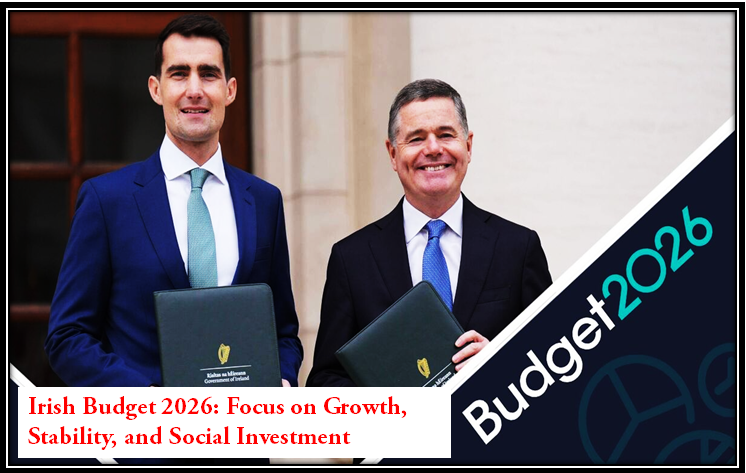
Dublin: Finance Minister Pascal Donohoe has unveiled Ireland’s budget for the 2026 financial year, describing it as a forward-looking plan designed to safeguard economic stability, protect existing jobs, and invest in the nation’s long-term growth.
Presenting the budget in parliament, Donohoe projected economic growth of 3.3% in 2025 and 2.3% in 2026, driven by strong domestic demand and continued fiscal discipline. The budget introduces a series of measures across housing, social welfare, education, and health, with a particular emphasis on affordability and inclusion.
Key Announcements
Employment and Economy
- 3,370 new healthcare positions to be created under the Health Department’s recruitment plan.
- Research & Development (R&D) tax credit to increase from 30% to 35%, encouraging innovation and investment.
- No major changes to personal income tax rates.
Wages and Living Costs
- National Minimum Wage to rise by 65 cents, reaching €14.15 per hour from 1 January 2026.
- VAT on fully built apartments reduced from 13.5% to 9% until December 2030, expected to lower housing costs and stimulate construction.
- VAT for restaurants, catering, and hairdressing to be cut from 13.5% to 9% effective 1 July 2026, likely easing consumer prices.
- 9% VAT rate on energy sectors (gas and electricity) to remain in place until December 2030, stabilising household energy bills.
Housing and Renters
- Renters’ Tax Credit of €1,000 per tenant extended until 2028.
- Mortgage Interest Tax Relief to continue for two more years, phasing out in the final year.
Social Welfare and Families
- €10 increase in weekly social welfare payments.
- €5 rise in the Fuel Allowance.
- Pension rates and other social protection payments to see further increases.
- Child Benefit to rise by €8 per month for children over 12 and €16 for those under 12.
- 1.5 million people to receive a 100% Christmas bonus.
- Working Family Payment income threshold raised to €60, improving access for low- and middle-income families.
- Higher income thresholds for Family Reunification procedures.
Education and Childcare
- Permanent €500 reduction in college tuition fees.
- Expanded eligibility for student grants through increased family income limits.
- More staff to be appointed in the special education sector, with added funding for school construction and expansion.
- Development of free childcare schemes and establishment of new childcare centres nationwide.
Health
- Additional funding allocated to the Department of Health to enhance hospital capacity and treatment services.
- Recruitment of 3,370 new healthcare workers as part of a broader effort to strengthen the public health system.
Irish Samachar English News
Comments are closed.