
Sinn Féin Faces Significant Setback in General Election
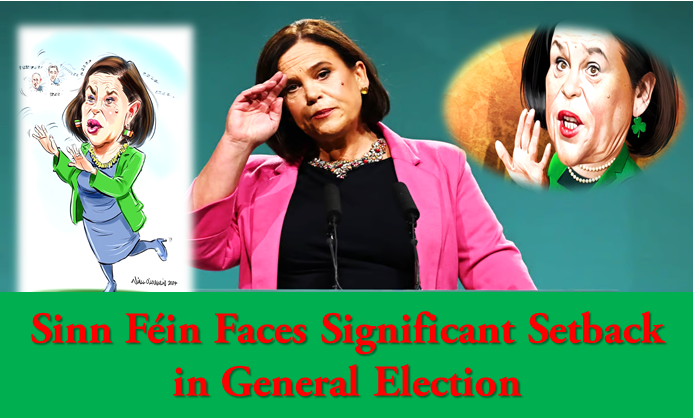
Dublin: The outcome of Ireland’s general election has been a major disappointment for Sinn Féin, a party that had anticipated a path to power. Despite several favourable factors, including widespread anti-government sentiment, Sinn Féin was unable to capitalise on the opportunity and deliver a strong performance. The results have cast doubt on the optimistic pre-election predictions, leaving supporters and party leadership disheartened.
Decline in Popularity
Sinn Féin’s vote share fell sharply to 16%, a dramatic decline from its peak of 37%. This marks the party’s poorest showing in a general election in over 35 years. The result has quashed expectations that Mary Lou McDonald, Sinn Féin’s president, would become Ireland’s first female Taoiseach in 2025.
The reversal is particularly notable as both Gerry Adams and McDonald had consistently grown the party’s vote share over the past decades. However, this election saw a dramatic shift in the opposite direction, highlighting challenges in voter perception and strategic execution.
Misjudged Momentum
Sinn Féin’s campaign was robust, and the party worked to rebuild its position after a period of decline. While this can be viewed as a relative success, it fell far short of expectations. Observers note that voter disillusionment and caution regarding Sinn Féin’s policies contributed to the party’s underwhelming performance.
The coalition government of Fine Gael and Fianna Fáil was thought to be under significant pressure due to anti-government sentiment, which many assumed would benefit Sinn Féin as the main opposition. However, this failed to materialise, with the electorate expressing reservations about the party’s policy proposals and internal dynamics.
Key Factors Behind the Poor Performance
Policy Challenges: Sinn Féin faced criticism for its unclear immigration policies and its perceived alignment with government positions during a controversial referendum in March.
Internal Strife: Ongoing internal conflicts have weakened the party’s unity and trustworthiness in the eyes of voters.
Constituency Setbacks: The candidacy of Gerry Hutch, a controversial figure, in Mary Lou McDonald’s home constituency dealt a personal blow. Local voters favoured Hutch over Sinn Féin candidates, undermining the party’s position.
Splinter Groups: Former Sinn Féin members such as Peadar Tóibín and Brian Stanley, who left the party over policy disagreements and formed Aontú, made significant gains, further eroding Sinn Féin’s voter base.
The Road Ahead
Sinn Féin is projected to increase its representation in the Dáil slightly, from 37 to 40 seats, but this falls far short of the expectations set by opinion polls. The party now faces a critical period of introspection. Without a clear strategy to regain voter trust, it risks further decline.
Some speculate that Sinn Féin may struggle to retain Mary Lou McDonald as its leader. Rumours of leadership challenges are circulating, fuelled by internal dissatisfaction with the election outcome. This period of reflection and possible reorganisation could determine the party’s future trajectory.
Collaboration with Fianna Fáil?
In the wake of the election, Sinn Féin may align with Fianna Fáil under Micheál Martin to stabilise the government if Fine Gael chooses not to participate. Such a move, however, could further complicate the party’s relationship with its base. Observers are eager to see if McDonald can navigate this complex political environment while maintaining her leadership position and the party’s identity.
For Sinn Féin, this election underscores the need for a strategic recalibration. While the next general election is four years away, the immediate challenge lies in rebuilding voter confidence and addressing internal discord. Whether Mary Lou McDonald will lead this effort or face a leadership challenge remains an open question.
Irish Samachar English News
{OR} Kindly click to follow the Irish Samachar News channel on WhatsApp
Comments are closed.