
Government to Expand Rent Pressure Zones Nationwide Under New Housing Legislation
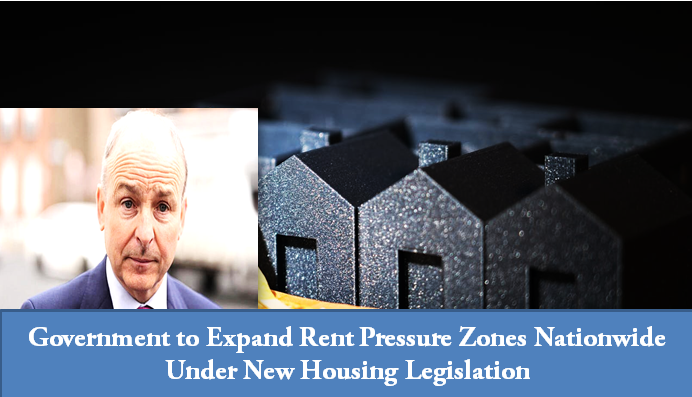
Dublin: Housing Minister James Brown is set to introduce new legislation that will expand Ireland’s Rent Pressure Zone (RPZ) framework to cover all tenants across the country. The law, approved after agreement among coalition leaders, will be presented at a Cabinet meeting attended by Prime Minister Micheál Martin, Tánaiste Simon Harris, Finance Minister Paschal Donohoe, Public Expenditure Minister Jack Chambers, and Minister Brown.
The legislation marks a significant change in Ireland’s rental market, extending RPZ regulations to areas previously outside the framework. Currently, around 20% of tenants live in locations not covered by RPZs. Under the new law, these tenants will now benefit from rent control measures, aimed at curbing rapid rent increases and improving tenure security.
Key Provisions of the New Law
- All rental properties nationwide will be included within the RPZ framework.
- Large landlords (defined as owning four or more properties) will be subject to stricter regulations, including a ban on no-fault evictions.
- Rent increases will only be permitted if a tenant voluntarily vacates the property.
- Rent caps will no longer apply to newly constructed buildings; instead, rent adjustments will be tied to inflation.
- Tenants will be entitled to a six-year security of tenure, which the government says provides long-term stability.
- Evictions will no longer be permitted as a mechanism to increase rent.
The government stated that the legislation aims to strike a balance between protecting tenants and ensuring the viability of private investment in the rental sector.
Opposition Criticism
Sinn Féin housing spokesperson Eoin Ó Broin criticises the proposal, accusing the government of misleading the public. He argued that the law will expose thousands of tenants, particularly those who entered leases before 2022, to the risk of eviction after six years.
Ó Broin further claimed that the legislation effectively creates a legal pathway for landlords to remove tenants under the guise of inflation-based adjustments, while doing little to address affordability or long-term housing security.
Prime Minister’s Response
Taoiseach Micheál Martin defended the measure, describing it as a “balanced and pragmatic” approach that both protects tenants and supports investment in much-needed housing supply. He dismissed opposition concerns as “politically motivated misrepresentations”.
Stakeholder Reactions
Mary Conway, Chair of the Irish Property Owners Association (IPOA), welcomed the legislation. She said the inflation-based rent adjustment mechanism is a positive step, though full details are still awaited.
In contrast, Focus Ireland voiced strong opposition. Advocacy Director Mike Allen warned the proposal could increase the financial strain on low-income tenants and exacerbate homelessness. He also criticised the plan for potentially phasing out rental subsidies and vowed to organise nationwide protests, starting with a demonstration outside Leinster House on June 17.
What Are Rent Pressure Zones?
Introduced in 2016, rent pressure zones are areas where rent increases are legally restricted due to high demand and limited housing supply. In RPZs, landlords can raise rent only once in a 12-month period, with increases typically tied to the Harmonised Index of Consumer Prices (HICP).
Previously, RPZs were limited to cities like Dublin and Cork, but the new law will make these controls nationwide, effectively reshaping the Irish rental market.
While supporters argue the move will standardise protections and stabilise housing costs, critics warn it may trigger unintended consequences, including rent hikes in newly built properties and greater pressure on housing supply.
Irish Samachar English News
{OR} Kindly click to follow the Irish Samachar News channel on WhatsApp
Comments are closed.