
EU Holds Emergency Talks Over Potential Refugee Influx From Iran
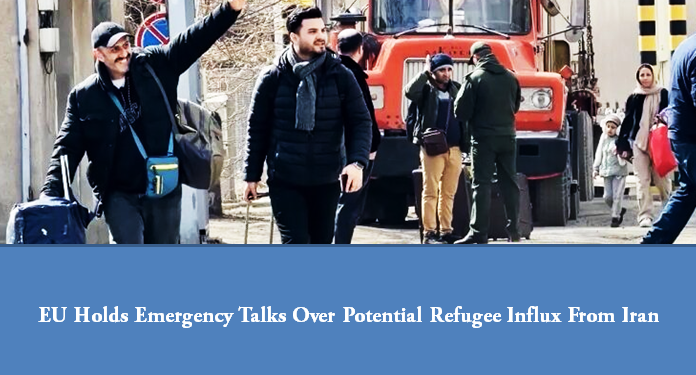
Brussels: The European Union has convened an emergency meeting to assess the possibility of a refugee influx from Iran amid the escalating conflict in the region. Justice and home affairs ministers from EU member states participated in the discussions, with Ireland represented by Justice Minister Jim O’Callaghan.
The meeting followed warnings from the European Union Agency for Asylum, which expressed concern that the ongoing instability in Tehran could trigger large-scale migration. In a report released after the outbreak of hostilities, the agency highlighted that Iran is already facing widespread unrest driven by economic difficulties and political repression.
It has been about a week since the United States and Israel launched military strikes against Iran. Security agencies believe that the assassination of Iranian Supreme Leader Ali Khamenei, along with other senior leaders including the country’s defence minister and army chief, could prompt supporters and civilians to flee the country.
According to the EU asylum agency, even partial destabilisation in Iran — a nation of around 90 million people — could result in an unprecedented wave of displacement. Officials warn that if even 10% of the population were forced to leave, it would represent the largest refugee movement in modern history.
Currently, Iran itself is the third-largest refugee-hosting country in the world, according to the United Nations High Commissioner for Refugees, hosting approximately 2.7 million refugees, most of them from Afghanistan. Last year, around 8,000 Iranian nationals applied for asylum in EU countries.
Across the European Union, as well as Norway and Switzerland, about 822,000 asylum applications were recorded last year — a decline of 20% compared with the previous year. By comparison, during the European migrant crisis, more than one million migrants crossed the Mediterranean into Europe, many fleeing the war in Syria. Nearly 4,000 people lost their lives attempting the dangerous journey that year.
With Cyprus currently holding the rotating EU presidency, officials there have warned that the possibility of a migration crisis similar to 2015 cannot be ruled out.
However, European Migration Commissioner Magnus Brunner stated that there is no immediate evidence of a large refugee movement from Iran, though the situation requires close monitoring.
The discussions also come ahead of the implementation of the EU Migration and Asylum Pact, agreed by EU member states in 2024 after years of negotiations. The new framework, set to take effect in June, aims to accelerate asylum decisions and distribute responsibilities and costs more evenly among member states.
Irish Samachar English News
Kindly click to join WhatsApp group chat to get important news and breaking news from Irish Samachar
Comments are closed.