
Ireland to Roll Out Enhanced Screening System for Asylum Seekers in June, Says Justice Minister
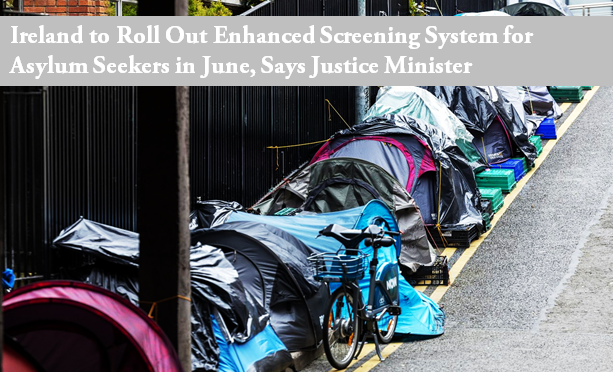
Dublin – Justice Minister Jim O’Callaghan has announced that Ireland will implement a more robust and modernised screening system for international protection applicants starting in June, as part of broader efforts to curb illegal immigration.
Speaking to reporters in Limerick, Minister O’Callaghan confirmed that the upgraded system will enhance the current Eurodac process, incorporating full biometric analysis for all individuals seeking asylum in Ireland. The minister also noted that the International Protection Bill is expected to be brought before a parliamentary committee by the end of the year.
The announcement follows recent concerns that Ireland’s ability to conduct thorough identity and security checks has been hindered by limited access to EU security databases available to Schengen member states. Ireland, which is not a part of the Schengen Area, currently lacks integration with some of these critical systems.
Minister O’Callaghan said he had recently visited Dublin Airport and is confident that asylum seekers’ fingerprints are being systematically recorded and entered into the Eurodac database. He added that Ireland is using Europol’s watch list to assess whether applicants have previously sought asylum elsewhere in the EU.
He acknowledged, however, that significant challenges remain, particularly regarding individuals entering the Republic via Northern Ireland — a commonly used route for many asylum seekers.
Former Defence Official Warns of Systemic Vulnerabilities
Former Deputy Director of Military Intelligence and retired Army Chief Michael Murphy has expressed grave concerns about the vulnerability of Ireland’s asylum system. Murphy cited the lack of border controls within the Common Travel Area and Ireland’s exclusion from key EU security infrastructure as major weaknesses.
“People are arriving without passports, and in some cases, on false documents,” Murphy said. “Without proper access to EU security systems, we cannot confidently verify their identities. This exposes the country to significant security risks.”
He warned that such systemic flaws could enable individuals with fraudulent intent to abuse the asylum process, undermining support for genuine refugees. Murphy also pointed out that Ireland is not fully implementing the Passenger Name Record (PNR) system — a key anti-terrorism tool used to track international travellers.
He called for a bilateral agreement with the UK, similar to the U.S. ESTA visa waiver programme, to regulate movement through the Common Travel Area and improve vetting procedures. “Given the high volume of asylum seekers arriving via the UK, closer cooperation is essential,” he said.
Political Reaction
Aontú leader Peadar Tóibín echoed Murphy’s concerns, stating that Irish immigration authorities are hamstrung by their inability to access EU criminal records of asylum applicants. He blamed government policy for not adequately sharing or requesting critical data and called for tighter border controls, particularly on the Northern Ireland frontier.
Tóibín urged the government to adopt a more coordinated and secure approach to asylum processing, warning that current gaps in enforcement and intelligence sharing leave Ireland exposed.
Irish Samachar English News
{OR} Kindly click to follow the Irish Samachar News channel on WhatsApp
Comments are closed.