
Bulgaria to Adopt the Euro on New Year’s Day, Becoming 21st Member of the Eurozone
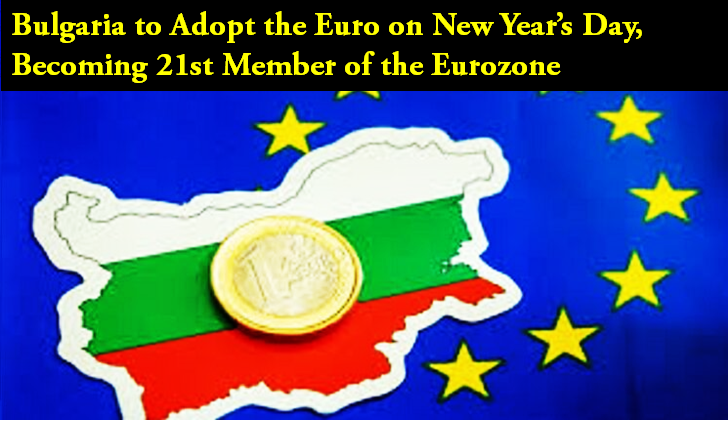
Sofia: After years of uncertainty, Bulgaria is set to become the 21st country to adopt the euro, officially joining the eurozone on New Year’s Day. The move is seen as a significant step toward strengthening the country’s economy, deepening its integration with the West, and reducing Russian influence.
Bulgaria has effectively operated under a fixed exchange-rate regime since the 1990s, when its currency was first pegged to the German mark and later to the euro following a period of hyperinflation. As a result, the country has long relied on monetary policy set by the European Central Bank (ECB). Bulgaria joined the European Union in 2007 and entered the eurozone’s waiting mechanism in 2020, alongside Croatia, which adopted the single currency in 2023.
Public opinion, however, remains divided. While far-right and pro-Russian parties have led opposition to the euro, concerns are particularly strong in rural areas, where fears persist that prices will rise following the transition. A recent Eurobarometer survey found that 49% of Bulgarians oppose adopting the single currency. As the EU’s poorest member state, Bulgaria has faced warnings that euro adoption could trigger inflation and economic instability, despite safeguards put in place by authorities.
The transition comes amid political turbulence. Bulgaria has experienced repeated anti-corruption protests, the collapse of successive governments, and eight elections in the past five years. Inflation has also strained household finances, with food prices rising by 5% in November—more than double the eurozone average, according to the National Statistical Institute. In response, parliament has established oversight committees to monitor prices and prevent unjustified increases during the changeover.
Tourism remains a key pillar of the Bulgarian economy, contributing about 8% of GDP. Policymakers hope euro adoption will boost confidence, reduce transaction costs, and encourage investment, particularly for small and medium-sized enterprises.
As the lev is phased out, new euro coins featuring national symbols will enter circulation. Designs include the Madara Rider, an early 8th-century rock relief and UNESCO World Heritage site, as well as Saint John of Rila, Bulgaria’s patron saint, and Paisius of Hilandar, a key figure in the country’s national revival. These motifs reflect Bulgaria’s cultural heritage, long depicted on the lev since its introduction in 1881.
ECB President Christine Lagarde has said the benefits of joining the eurozone are substantial, citing easier trade, lower costs, and greater price stability. She noted that businesses could save up to €500 million in exchange-related fees.
Irish Samachar English News
Kindly click to join WhatsApp group chat to get important news and breaking news from Irish Samachar
Comments are closed.