
Drumcree Parade Dispute Resurfaces in Portadown After 28-Year Ban
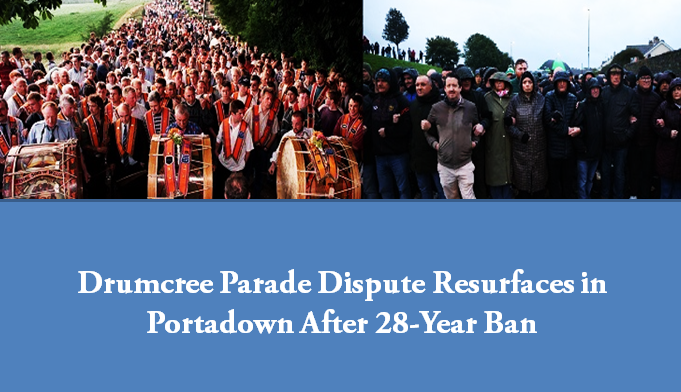
Portadown: Tensions between Catholics and Protestants have resurfaced in Portadown, Northern Ireland, over the long-running dispute surrounding the Orange Order’s Drumcree parade and its proposed return route along the mainly nationalist Garvaghy Road.
The Parades Commission granted permission for a limited Orange Order procession from Drumcree Church along the contested route on Sunday, September 27, in a decision that marked the first time in 28 years that such a parade had been permitted.
However, the procession did not take place after residents gathered on the road in protest. The Commission had imposed strict conditions, allowing no more than 35 Orangemen to take part, with no supporters or bands permitted. The march was also required to leave Drumcree Church by 8am and disperse by 9.30am.
The dispute has brought back memories of the intense confrontations surrounding Drumcree during the 1990s, when the parade became one of Northern Ireland’s most contentious public-procession disputes.
What is the Drumcree parade?
The Drumcree parade is an Orange Order procession traditionally associated with a church service at Drumcree Church in Portadown.
The Orange Order, a Protestant fraternal organisation, regards the route as part of its traditional right to parade. Residents of the Garvaghy Road, a predominantly nationalist area, have opposed the procession passing through their community.
The Parades Commission first prohibited the Orange Order from using the Garvaghy Road in 1998 following years of confrontation and serious disorder. The Commission’s 1998 determination specifically barred the procession from proceeding along the road.
The dispute subsequently became one of the longest-running parading controversies in Northern Ireland. The Orange Order has not been permitted to complete the Drumcree return route along the Garvaghy Road since 1998.
How did the dispute return?
The latest controversy followed a legal challenge to restrictions on this year’s proposed parade.
The Parades Commission subsequently granted permission for a much smaller procession of up to 35 people. Residents challenged the decision in the Belfast High Court, leading to an unprecedented late-night legal hearing.
The court ultimately dismissed the challenge, allowing the restricted parade to proceed on Sunday morning.
By Sunday morning, however, around 1,000 people had gathered on the Garvaghy Road in anticipation of the march. With the road blocked by protesters, the Orange Order members remained outside Drumcree Church, and the planned procession did not proceed.
The episode has also generated political debate, with unionist representatives supporting the Orange Order’s right to complete the route and nationalist representatives backing the residents’ opposition.
Tensions ease after weekend standoff
The immediate tension eased after protesters dispersed, although the wider dispute remains unresolved.
Representatives of the residents are expected to hold discussions with Northern Ireland officials and police representatives as efforts continue to find a way forward.
The latest dispute has revived concerns that the unresolved disagreement over contentious parades could once again deepen community tensions in the town.
Irish Samachar English News