
Ireland Faces Demographic Decline as Birth Rates and Workforce Numbers Fall, Warns NESC
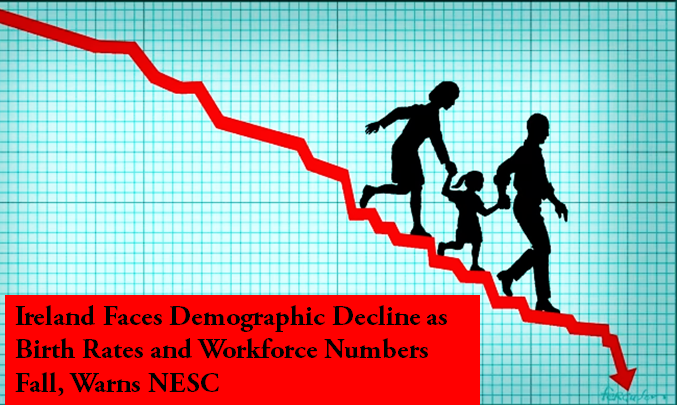
Dublin: The National Economic and Social Council (NESC) has submitted a stark report to the Government warning that Ireland is entering a period of significant demographic decline, marked by falling birth rates and a shrinking workforce.
The report, Building a Virtuous Demographic Cycle, was presented to a parliamentary committee on Monday. It urges the State to encourage larger families and adopt a more welcoming and supportive approach to immigration in response to the sustained drop in births. NESC, which advises the government on long-term strategic issues such as economic development and social justice, said urgent and coordinated action is needed to avoid long-term social and economic consequences.
Major demographic shifts
According to the report, Ireland has passed two key demographic milestones: “Peak Baby” in 2010 and “Peak Child” in 2024. Births peaked at around 77,000 in 2010 and have been declining steadily since, with the downward trend expected to continue.
NESC warns that the ratio of workers to non-workers will begin to shrink within the next decade, while overall population decline is projected by 2050. Without intervention, these trends will place increasing strain on public finances, pensions, healthcare, housing and other essential services.
Risks of a vicious cycle
The council cautions that pressures on housing, infrastructure and public services could discourage both family formation and inward migration, creating a “vicious cycle” of lower fertility, an ageing population and reduced economic vitality. This, in turn, would increase intergenerational inequality and make the situation increasingly difficult to reverse.
Turning population change into an opportunity
To counter these risks, NESC recommends creating a “virtuous demographic cycle” by viewing population growth as an opportunity rather than a burden. Key measures include increased investment in affordable housing, accessible childcare, public transport, and inclusive workplaces that support older workers, people with disabilities, and single parents.
The report argues that fertility rates can be stabilised through stronger family supports, affordable childcare and housing, adequate parental leave, and income and welfare policies that reduce the financial risks of having children.
Role of immigration
NESC also highlights the importance of attracting and retaining migrants, particularly younger people who wish to build families in Ireland. It calls for a comprehensive “social migration pact” that supports migrants to settle, integrate and contribute fully to society, thereby strengthening social cohesion and public confidence in migration.
Irish Samachar English News
Kindly click to join WhatsApp group chat to get important news and breaking news from Irish Samachar
Comments are closed.