
Ireland Faces Economic Risks as U.S. Tariffs Threaten Trade and Jobs
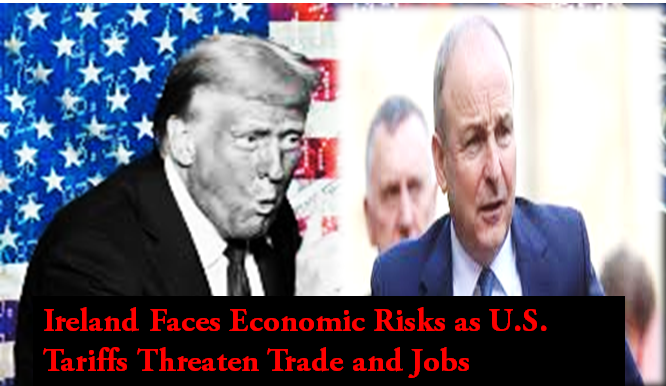
Dublin: Concerns are mounting that the 25% tariffs on European Union imports announced by U.S. President Donald Trump could deliver a severe blow to Ireland’s economy. Analysts warn that the tariffs could drive up costs for businesses and households, disrupt supply chains, and lead to significant job losses across key industries.
Trump’s announcement—targeting all EU imports, including vehicles—is framed as an effort to address trade imbalances and protect U.S. industries. He has also taken a combative stance against the EU, claiming it was “designed to break the United States.” The news has already rattled financial markets, with European car manufacturers seeing sharp declines—BMW shares fell by 4%, while Porsche dropped 3.6%. Experts caution that a retaliatory response from the EU could further escalate the situation, amplifying economic instability on both sides of the Atlantic.
Five Major Challenges for Ireland
- Rising Consumer Prices
If the EU imposes counter-tariffs on U.S. goods, American imports such as technology, clothing, and food products (e.g., whiskey and beef) will become more expensive in Ireland. Additionally, if Irish exports to the U.S. face new tariffs, businesses may pass these costs on to consumers. - Job Security & Business Impact
The U.S. is one of Ireland’s largest trading partners, and many Irish companies rely on exports to the U.S. in sectors like pharmaceuticals, dairy, and technology. Increased trade barriers could reduce demand, threaten jobs, and disrupt growth in these industries. - Higher Vehicle Prices
The tariffs will directly impact European carmakers, potentially raising the cost of imported vehicles from brands like BMW, Volkswagen, and Peugeot. This would make new cars more expensive for Irish consumers and impact the automotive sector. - Stock Market & Pension Fund Volatility
If global financial markets react negatively to the escalating trade dispute, Irish pension funds and stock market investments could suffer. This may lead to reduced retirement savings for workers and increased financial uncertainty. - General Economic Uncertainty
Trade wars create an unstable economic environment, discouraging businesses from investing or hiring due to unpredictable costs and potential revenue losses. This could slow economic growth, affecting wages and employment opportunities in Ireland.
Minister Warns of Economic Risks
Public Expenditure Minister Jack Chambers has described the tariffs as a serious risk to Irish households and businesses. He confirmed that the Department of Finance is assessing the impact of the new trade barriers and monitoring potential disruptions to global supply chains.
“There is no doubt that these tariffs will create a serious economic situation,” Chambers stated. “We need to analyse which sectors will be most affected and how we can mitigate job losses.”
The government is now developing scenario planning strategies to protect Irish businesses and workers from the fallout. Chambers acknowledged that job losses in Ireland could be significant and could deter new companies from entering the market.
Prime Minister’s U.S. Visit & Trade Diplomacy
The prime minister and other senior ministers will travel to the U.S. next month as part of St. Patrick’s Day celebrations. Officials hope to engage with U.S. counterparts on trade issues and advocate for Ireland’s economic interests.
Additionally, the Prime Minister will visit Chile and Argentina to strengthen bilateral relations. Discussions will include the importance of free trade, the risks of protectionism, and the broader impact of tariffs on the global economy.
Irish Samachar English News
{OR} Kindly click to follow the Irish Samachar News channel on WhatsApp
Comments are closed.