
General Election Voting Begins Amid High Anticipation…
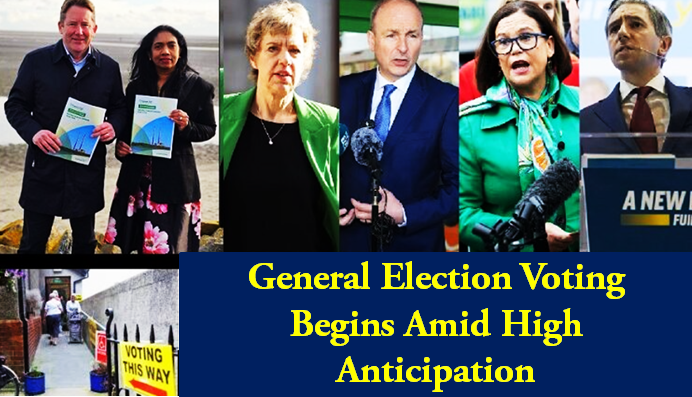
Dublin: Voting for Ireland’s general election commenced today, November 29, with polling stations opening at 7:00 AM. Despite the biting cold, long queues of voters formed outside polling booths across Dublin County, reflecting the high electoral engagement.
This election is pivotal, with political leaders vying for dominance amid shifting alliances. Outgoing Taoiseach Simon Harris of Fine Gael faces an uncertain future, while Fianna Fáil leader Micheál Martin maintains a composed stance. Sinn Féin leader Mary Lou McDonald exudes confidence, seeking to rally support for transformative change.
A Unique Political Landscape
Ireland’s electoral process is marked by its absence of pre-election coalitions. Each party contests individually, making it unlikely for any single party to secure a majority. Post-election, alliances are forged opportunistically to form a government. This dynamic creates a vibrant yet unpredictable political landscape.
Campaign Highlights and Party Strategies
Fine Gael vs Sinn Féin
The final opinion polls showed Fine Gael and Sinn Féin neck-and-neck at 20%, with Fine Gael slipping to third place in an Irish Times/Ipsos B&A poll. Fine Gael’s campaign, led by Simon Harris, aimed to position Sinn Féin as a risky choice, urging voters to reject them. Harris called for Labour’s second-preference votes but was met with resistance from Labour leader Ivana Bacik, who criticised his overture as insincere.
Victory for an Indian candidate appears highly likely in the Fine Gael East constituency, where the Fianna Fáil contender, Manju Devi, is vying for a seat. Devi is contesting alongside Minister Darragh O’Brien, representing Fianna Fáil. Success for Manju Devi seems assured if she can mobilise the substantial immigrant voter base in the constituency, particularly leveraging the significant Indian community’s support.
Labour and the Left
Labour and other left-leaning parties, including Sinn Féin and the Social Democrats, emphasised a radical shift in governance. Bacik and Sinn Féin’s McDonald called for progressive policies and rallied voters to challenge the status quo.
Fianna Fáil’s Steady Approach
Fianna Fáil leader Micheál Martin maintained a measured campaign, focusing on housing and disability services. He urged voters to trust the ballot box, leaving coalition discussions for after the election.
Green Party and Smaller Parties
Green Party leader Roderic O’Gorman appealed for continued support, highlighting their role in challenging traditional power structures. However, in O’Gorman’s Dublin West constituency, counter-campaigns emerged against the Greens.
Aontú leader Peadar Tóibín focused on rural development, accountability, and economic justice, appealing to a growing support base, particularly in regions like Meath and Cork.
Social Democrats and Emerging Voices
Social Democrats leader Gary Gannon criticised Fine Gael’s long rule, urging voters to back left-wing coalitions for meaningful change. The party continues to align with Sinn Féin, Labour, and People Before Profit to form a united leftist front.
Immigrant Participation: A Key Factor
Ireland’s immigrant population holds significant electoral power, with over 4,000 votes in many Dublin constituencies. However, many immigrants are disillusioned and abstain from voting. Campaigns urge them to exercise their right, emphasising the decisive role of every vote in Ireland’s proportional representation system.
Polling Hours: 7:00 AM to 10:00 PM.
As voting continues, the outcome of this closely contested election remains unpredictable. Political parties and voters alike are bracing for the results, which will set the course for Ireland’s future. Remember to vote—it’s your right and responsibility.
Irish Samachar English News
{OR} Kindly click to follow the Irish Samachar News channel on WhatsApp
Comments are closed.