
Navigating Ireland’s Snow-Covered Roads Safely
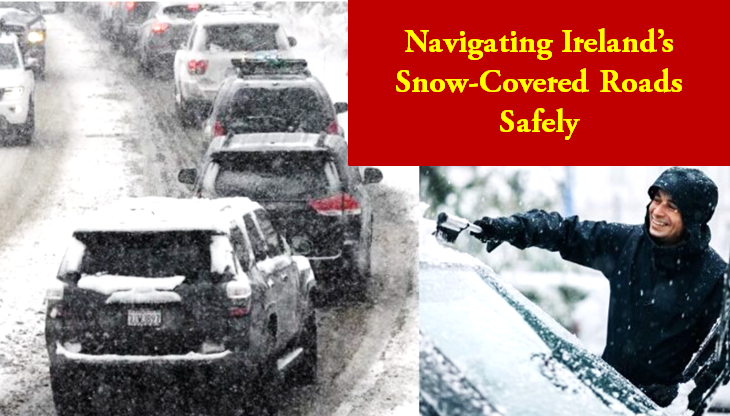
Dublin: As heavy snow blankets Ireland, roads and bridges are treacherously icy, causing widespread disruptions to traffic. The Road Safety Authority (RSA), Gardaí, and Met Éireann have issued urgent warnings advising motorists to avoid travel unless absolutely necessary. For those who must drive, adhering to winter driving best practices is essential to ensure safety.
Preparing Your Vehicle for Winter Driving
- Battery and Tires:
- Ensure your car battery is in good condition, particularly if it is more than a year old. Check if it needs replacement to avoid breakdowns.
- Tires should meet the minimum tread depth requirement of 1.6mm. Use a tread depth gauge or visit a tire shop for verification.
- Driving with worn or under-inflated tires is both dangerous and costly. Ensure your car has a properly inflated spare wheel and know how to replace a flat tire.
- Brakes and Lights:
- Confirm that the braking system is functional and check for safety technologies such as Electronic Stability Control (ESC) and Anti-Lock Braking System (ABS), which provide additional support in poor weather conditions.
- Use dipped headlights even during the day to enhance visibility, and ensure both headlights and taillights are operational.
- De-Icing the Car:
- Do not use boiling water to de-ice the car, as it can crack the glass. Instead, use a de-icer spray and a scraper.
- Keep the engine running while de-icing to prevent vehicle theft and to ensure locks are not damaged by freezing water.
Driving Techniques for Snow and Ice
Adjust Your Speed: Drive slowly and maintain a safe distance from the vehicle ahead. Sudden braking or acceleration should be avoided to reduce the risk of skidding.
Skid Management: If the vehicle begins to skid, steer gently in the direction of the skid to regain control.
High Gear Usage: When driving on icy or snowy roads, use a higher gear to maintain better traction.
Avoid Flooded Areas: Do not attempt to drive through water-logged areas where road visibility is compromised.
Maintaining Visibility and Safety
Clear Vision: Clean all windows, mirrors, and lights thoroughly to ensure unobstructed views.
Black Ice Awareness: Be vigilant for black ice, an invisible hazard that often forms on shaded areas of roads.
Winter Essentials: Keep a de-icer, screen scraper, and other essentials in your vehicle.
Items to Carry in the Vehicle
Pack the following essentials to prepare for emergencies:
- High-visibility vest
- Tow rope and shovel
- Hazard warning triangle
- Spare bulbs and tire
- De-icing equipment
- First aid kit and fire extinguisher
- Torch, car blanket, extra clothing, and sturdy footwear
- Food, water, and a fully charged phone
In Case of a Breakdown
Minimise Obstruction: Move the vehicle to the roadside as much as possible. Activate hazard warning lights to alert other motorists.
Motorway Safety: On motorways, signal your presence and notify Gardaí if assistance is needed.
Stay Warm and Visible: Use your emergency supplies to remain warm and visible while waiting for help.
Monitor Weather and Traffic Updates
Stay informed through local weather and traffic reports. Met Éireann and RSA updates can provide critical information about hazardous conditions and road closures.
Key Reminder
Above all, drive slowly and cautiously. Winter conditions demand heightened vigilance to ensure your safety and that of others on the road.
Irish Samachar English News
{OR} Kindly click to follow the Irish Samachar News channel on WhatsApp
Comments are closed.