
Rising Costs of Essentials Strain Irish Households Despite Dip in Inflation, Reports CSO
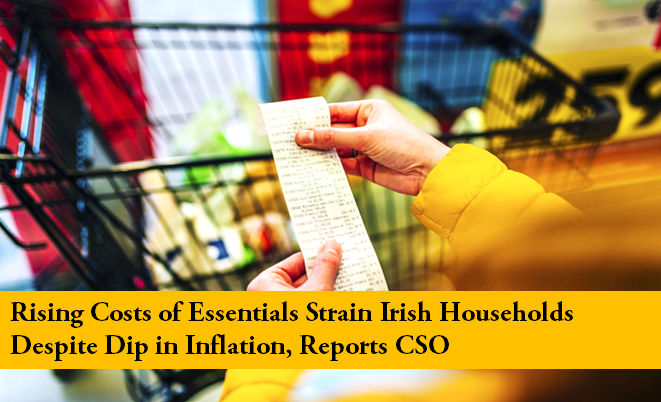
Dublin — Soaring prices of everyday essentials, including fuel, food, and household items, continue to strain the cost of living in Ireland, despite a modest decline in inflation rates. The Central Statistics Office (CSO) reports a 2.2% year-on-year increase in prices, with key sectors still grappling with persistent inflationary pressures.
The steepest increases were recorded in the food, entertainment, and cultural sectors, where prices rose by approximately 4.2%. These price hikes have significantly impacted the cost of annual entertainment and leisure packages, further burdening consumers.
Food and beverage prices rose by 3.4% over the past year. Specific staples saw dramatic increases: the price of a pound of butter surged by 97%, Irish cheddar rose by 79% per kilogram, and two litres of full-fat milk saw a 27% increase. The cost of brown sliced bread also nearly doubled.
Despite these pressures, the government has confirmed there will be no new energy credits or additional cost-of-living relief measures in the upcoming budget. Energy credits were a key feature of last October’s budget, but officials now argue that with headline inflation easing, such supports are no longer justified.
Last year’s budget also introduced one-off payments in areas such as child benefit, disability allowance, and fuel allowance, along with a renter’s tax credit. However, the government has yet to confirm whether any of these supports will continue.
Robert Purdue, Head of Dealing at global financial services firm Ebury, said the latest figures are the clearest indication yet that inflationary pressure remains strong. Seasonal factors such as Easter and St. Patrick’s Day celebrations are believed to have contributed to increased spending on food and alcohol. In addition, warmer weather and school holidays have driven up demand in the leisure sector.
Purdue also warned that critical sectors such as pharmaceuticals remain vulnerable amid ongoing concerns about potential U.S. tariffs. These trade uncertainties are expected to persist until a formal agreement is reached with the United States.
The inflation update comes shortly after the European Central Bank (ECB) reduced its interest rate to 2.25%. While this move may benefit borrowers through lower lending costs, it also presents a challenge for investors who may face reduced returns.
Inflation in Ireland peaked at 9.2% in 2022, fuelled by post-pandemic demand for energy and exacerbated by Russia’s invasion of Ukraine. Although energy prices have since moderated, many households continue to face significant financial strain.
Irish Samachar English News
{OR} Kindly click to follow the Irish Samachar News channel on WhatsApp
Comments are closed.