
Trump’s Tariff Strategy Sparks Global Economic Debate
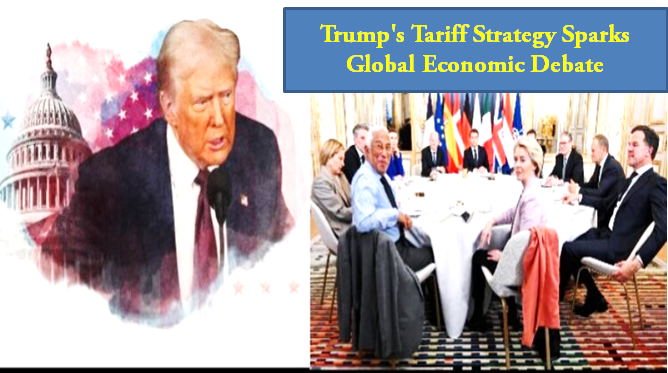
Washington: The United States’ recent imposition of sweeping tariffs under President Donald Trump has become a central focus of global economic discourse, as experts and world leaders assess the broader implications of the policy shift. The administration’s move—framing tariffs as a measure to protect American industry and restore trade balance—is seen by some as a bold and strategic step, while others warn of severe consequences for global markets.
Global Repercussions and Economic Uncertainty
The newly imposed tariffs, which target a wide range of goods imported into the United States, are calculated as a percentage of the import value. President Trump has argued that the goal is to promote domestic production and discourage reliance on foreign imports. However, economists caution that these measures could fuel inflation, disrupt supply chains, and ultimately slow global economic growth.
The Trump administration has defended the policy by accusing other countries—particularly those with significant trade surpluses with the U.S.—of exploiting America’s openness while failing to reciprocate. Trump has cited trade practices in Ireland and other EU nations as examples of economic behaviour that disadvantages American workers and undermines U.S. prestige. He also linked the tariffs to national security concerns, alleging misuse of American corporate profits and foreign policy complacency toward allies like Ukraine.
Strategic Targeting of Trade Imbalances
Trump has made it clear that the tariffs are part of a broader campaign to counter what he describes as unfair trade relationships. The latest round includes a base 10% tariff on imports, rising to 20% for products from European Union countries, with specific sectors like steel, aluminium, automobiles, and automotive parts facing tariffs as high as 25%.
The president accused the EU of imposing unjust tariffs on U.S. goods and described their trade behaviour as “deplorable”. He labelled certain nations as “the Dirty 15”, a reference to countries he believes are benefiting disproportionately at America’s expense. Trump argued that this bold action would spark greater domestic competition, lower consumer prices, and reignite American manufacturing.
Ireland and the EU Respond
Irish Prime Minister Micheál Martin condemned the tariff move, stating unequivocally that such measures will “benefit no one”. Emphasising Ireland’s commitment to open and fair trade, Martin called the U.S. decision deeply regrettable and economically harmful.
“There is no justification for these tariffs,” Martin said, adding that the Irish government is coordinating closely with the European Union to protect national economic interests and the working population. He confirmed that he has spoken directly with the President of the European Commission regarding Ireland’s response.
Ireland’s Foreign Affairs Minister Simon Harris echoed these concerns, calling the tariffs a “no-win policy” that harms consumers, workers, and businesses on both sides of the Atlantic. Harris pledged to work with EU counterparts and government officials to find a resolution that supports free trade and mitigates potential damage to Ireland’s economy.
As the global community braces for the fallout, it remains to be seen whether Trump’s aggressive tariff strategy will achieve its intended economic goals—or exacerbate global tensions in an already fragile trade landscape.
Irish Samachar English News
{OR} Kindly click to follow the Irish Samachar News channel on WhatsApp
Comments are closed.