
Budget 2027: €1.65bn Tax Package, €10 Welfare Increase and Energy Relief Announced
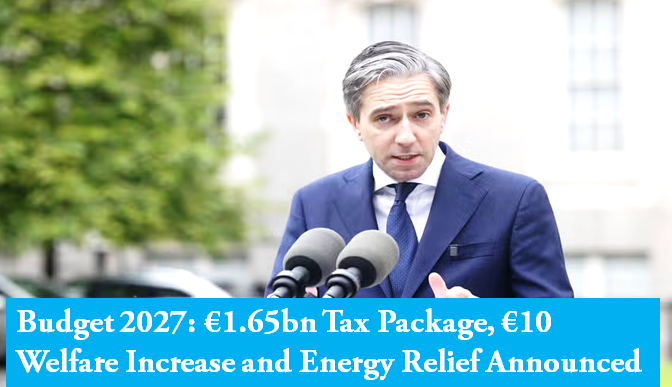
Dublin: Ireland’s Budget 2027 is set to deliver a series of measures aimed at easing pressure on households as the cost of living and energy prices remain elevated.
Tánaiste and Minister for Finance Simon Harris is expected to announce tax changes worth a total of €1.65 billion, including an additional €150 million in measures compared with the package previously anticipated. The overall tax package has been expanded to include further measures aimed at reducing energy costs.
Income tax changes
Income tax thresholds and credits will be increased, allowing salaried workers to retain more of their earnings.
The annual income threshold at which the 40 per cent rate of income tax applies will rise by €2,500, from €44,000 to €46,500. This means income up to €46,500 will be subject to the standard 20 per cent rate before the higher rate applies.
The personal tax credit, employee tax credit and earned income tax credit will each increase by €125, bringing each credit to €2,125 for eligible taxpayers.
The changes are expected to provide a significant financial benefit to workers.
A single person earning €50,000 a year is expected to gain approximately €750 from the tax measures, while a couple with a combined annual income of €100,000 could see an annual gain of around €1,500.
The government expects the combined effect of the budget measures to leave people significantly better off, with the Finance Minister aiming to provide an overall benefit of at least €1,000 for individuals through the various measures.
Minimum wage to rise to €14.94
The government will also accept the recommendation of the Low Pay Commission to increase the national minimum wage by 79 cents per hour, bringing it to €14.94.
The increase will also result in a higher income threshold for the 2 per cent Universal Social Charge (USC), ensuring that workers receiving the minimum wage increase do not lose part of the benefit through an additional USC liability.
The budget will also provide a €10 increase in the weekly rates of core social welfare payments, providing additional support to households facing higher living costs.
Home heating costs to fall
The government is also expected to reduce the carbon tax applied to oil and gas used for home heating.
The carbon tax rate is expected to fall from the current €63.50 per tonne to €48 per tonne, with the aim of reducing household energy costs ahead of the winter months.
It is understood that the additional measures aimed at reducing energy costs have contributed to the increase in the overall tax package. Without those measures, the tax package would have remained closer to the previously indicated limit of €1.5 billion.
Higher taxes on cigarettes and vapes
Alongside tax reductions and relief measures, the budget will also contain measures aimed at increasing state revenues.
The special bank levy will be extended for another year, with the government expecting to raise approximately €200 million from the measure.
Taxes on cigarettes and vaping products will also increase.
The government is retaining the €7 billion ceiling for additional public spending. The limit, which represents a 6 per cent increase, followed difficult negotiations between coalition ministers and Minister for Public Expenditure Jack Chambers.
The government will face scrutiny over whether it can maintain the spending ceiling, following concerns that spending limits have been exceeded in previous years, including during 2026.
Childcare package to save parents at least €1,000 a year
A major childcare package is also expected to be announced, providing significant relief to families with young children.
The measures are designed to help parents with children in full-time childcare save at least €1,000 a year.
Childcare costs are particularly significant for families with children under seven, and the package will focus heavily on this age group.
An increase in funding under the National Childcare Scheme is expected to benefit children participating in the Early Childhood Care and Education programme, as well as younger primary school children.
The package is also expected to provide additional support for families with older school-going children, with measures aimed at reducing associated childcare and school-related costs.
The government is also considering additional financial support to increase wages for workers in the childcare sector. Officials are examining ways to ensure that increases in state funding translate into lower costs for parents rather than being absorbed entirely through higher fees.
Disability payment and pension increases
The budget is also expected to include a €500 lump-sum payment for people receiving certain disability-related payments.
A €10 weekly increase in the state pension and key social welfare payments is also expected to be introduced.
The Department of Finance has received a range of submissions on housing and taxation ahead of the budget.
There has also been continued pressure from some government TDs for measures relating to stamp duty for first-time buyers.
While Finance Minister Simon Harris has repeatedly indicated that he does not intend to reduce or abolish stamp duty for first-time buyers, some TDs are continuing to press for changes.
The issue is expected to remain a point of discussion as the Government finalises its wider housing measures in Budget 2027.
Irish Samachar English News