
Irish Public Sector Strike Disrupts Schools, Hospitals and Government Services as Pay Dispute Deepens
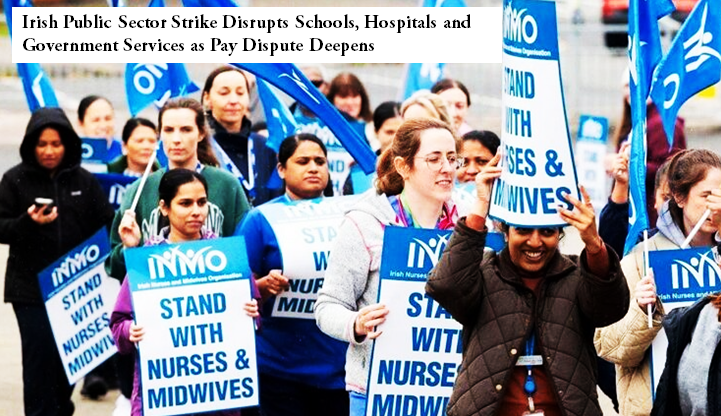
Dublin: A 24-hour strike by public sector workers across Ireland has begun, with employees demanding pay increases and guarantees to protect their wages against the rising cost of living. More than 300,000 workers, including nurses, doctors, teachers and civil servants, are expected to participate, causing widespread disruption to education, healthcare and government services.
The industrial action follows the failure to reach a new public service pay agreement to replace the deal that expired in June. Unions have also announced a second strike for October 21 if the dispute remains unresolved.
Schools closed as parents face childcare difficulties
Almost all primary and secondary schools across the country are expected to close during the strike, as teachers and special needs assistants (SNAs) join the industrial action.
The closures have left many parents scrambling to make alternative childcare arrangements or take time off work.
Arrangements at colleges and universities vary by institution. Trinity College Dublin has indicated that campus access will remain available, but classes and events will not take place. The National College of Ireland, meanwhile, has said it will operate as usual.
Routine hospital appointments and surgeries cancelled
The Health Service Executive (HSE) has cancelled routine hospital appointments, scheduled surgeries and non-urgent medical procedures for the day. Outpatient departments and community clinics are also experiencing disruption.
Services including physiotherapy, speech and language therapy, and routine dental care are affected. Day services for older people and people with disabilities may also face interruptions.
Home support services are prioritising people who require the greatest assistance, particularly those considered most vulnerable.
The HSE said cancelled appointments would be rescheduled as soon as possible and that efforts were being made to contact affected patients.
Emergency departments, urgent cancer treatment and dialysis services are expected to continue operating. However, ambulance services may face delays because of reduced capacity, with priority given to the most urgent cases.
GP services, out-of-hours GP services and injury units are expected to remain available. The HSE has advised people not to delay seeking emergency medical assistance because of the strike. In a serious emergency, the public should call 112 or 999.
Courts, Parliament and public offices affected
Most court sittings are not taking place during the strike, although exemptions remain for urgent matters, including domestic violence cases, child protection applications and certain remand proceedings.
Meetings of Dáil Éireann, Seanad Éireann and parliamentary committees have also been postponed, while Leinster House is closed for the day.
Driving tests may be affected, with applicants due to receive direct notification of any changes.
Local authority services are also facing disruption, and many libraries are expected to close. Employees across government departments and state agencies are participating in the industrial action.
The relevant department has said social welfare payments will not be disrupted by the strike.
Public transport expected to operate, but pickets may cause disruption
Bus, DART, Luas and rail services are expected to operate as normal, although local disruptions may occur where picket lines affect access to workplaces and transport facilities.
The National Bus and Rail Union has instructed Dublin Bus employees not to be compelled to drive through picket lines at hospitals, colleges and ports.
Gardaí and members of the Defence Forces are not participating in the strike, as they are legally prohibited from taking industrial action.
Unions demand guarantees in pay negotiations
The strike comes amid an ongoing dispute over a replacement for the public service pay agreement that expired in June.
Trade unions want pay to be addressed at the outset of negotiations and are seeking safeguards to prevent inflation from eroding workers’ purchasing power. They also want the loss in real wages experienced during the cost-of-living crisis to be taken into account.
The government has allocated €1.2 billion towards a new public service pay agreement in Budget 2027.
Minister for Public Expenditure Jack Chambers said on RTÉ’s Prime Time programme on Tuesday night that negotiations could begin on pay. He said the government wanted to reach an agreement that would be fair to employees while remaining affordable for the state.
However, unions have criticised the Government for failing to address workers’ concerns adequately as the cost of essentials, including food, rent and energy, continues to rise.
Union representatives insist they will not abandon their demands without clear assurances that the impact of inflation and the erosion of wages will be addressed.
With a second strike scheduled for October 21, pressure is mounting on both sides to reach an agreement and prevent further disruption to essential public services.
Irish Samachar English News