
Dáil Gives First Approval to Bill Changing Ireland’s Triple Lock System for Overseas Troop Deployments
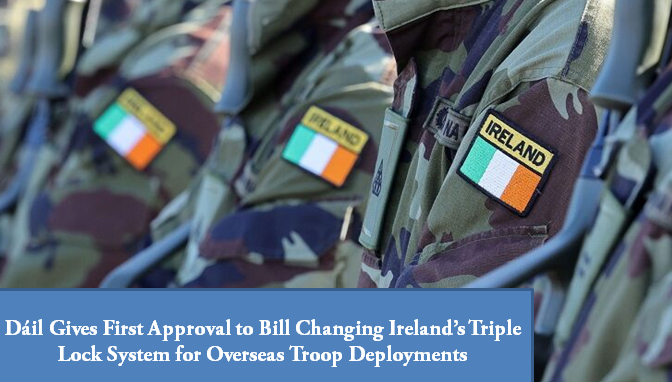
Dublin: The Dáil has given its first approval to a bill that would change Ireland’s “triple lock” system for sending troops abroad. In Wednesday’s vote, 79 TDs voted in favour and 71 voted against, as the Government’s proposal to remove the requirement for United Nations approval triggered a sharp clash with the opposition.
What is the triple lock?
The triple lock is the system that requires approval from the Government, the Dáil and the United Nations before more than 12 Irish soldiers can be deployed on overseas peacekeeping missions. The proposed legislation would remove the requirement for UN approval.
The bill does not become law simply because it has passed this first vote. It will now move to detailed committee-stage scrutiny, which is expected to take place next month. The legislation is expected to complete its passage before the end of the year.
Government says peacekeeping missions will continue
The government argues that the legal change is essential to ensure Ireland can continue participating in overseas peacekeeping missions. Defence Minister Helen McEntee said the veto powers held by permanent members of the UN Security Council can prevent Ireland from making its own decisions.
She argued that the current system allows countries, including Russia, to influence where Irish peacekeepers can be deployed. The minister also said the existing triple lock system is no longer suited to today’s changing global circumstances.
Opposition says neutrality is under threat
The opposition has accused the government of undermining Ireland’s military neutrality. Sinn Féin leader Mary Lou McDonald said allowing participation in overseas military operations without UN approval would remove an important safeguard.
She warned that the change could draw Ireland closer to European military structures and NATO. McDonald also renewed her call for a referendum, arguing that the public should have the final say on such a significant change affecting Irish neutrality.
Meanwhile, Fianna Fáil TDs John McGuinness and Willie O’Dea did not participate in Wednesday’s vote. While the government has cleared the first parliamentary hurdle, the legislation is expected to face a fierce political battle as it moves through the next stages of the legislative process.
Irish Samachar English News